
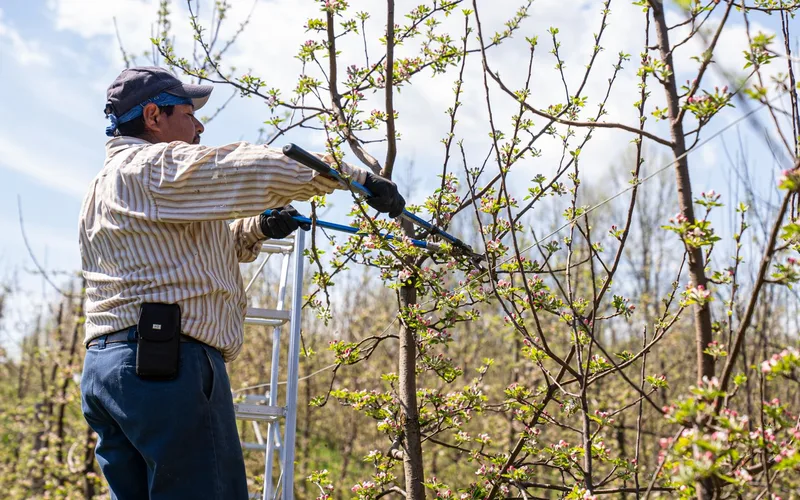
For tree pruning at a Chicago-area home, ask for branch-removal cuts that leave the branch collar intact, and ask for selective reduction rather than topping when you need clearance. Before accepting a proposal to “take the top down,” have the arborist show what will be shortened and what will remain. Leave large cuts and compromised or falling limbs to qualified help, especially where people could be underneath; for overhead lines, contact the serving utility first. Branch cuts and crown reduction · Pruning safety · Power-line safety
Ask where the collar will be after the cut
The branch collar is the tissue around the base of the branch. When a branch is removed, the finished cut belongs just outside the collar: not flush against the trunk and not out on the branch leaving an unnecessary stub. A flush cut removes collar tissue and leaves a larger wound. If the collar is hard to see from the ground, ask the arborist to point it out on a safely visible branch rather than getting closer to overhead work. On a heavy limb, ask how they'll prevent its weight from tearing bark; don't take a recognizable cut location as a sign the job is safe to do yourself. Collar protection and bark tearing · Finished branch-cut placement
Ask which side branch stays
Name the actual clearance problem, such as a branch reaching toward the roof, rather than asking for a uniformly lower crown. In selective reduction, the arborist shortens a branch back to a suitable side branch. Topping leaves stubs where branches are cut at arbitrary points and can produce weak new growth and unwanted shoots. If the proposal specifies only a lower height, ask the arborist to identify a branch that will be shortened and the side branch that will stay. The answer should connect the work to the clearance you need. Reduction versus topping
Question a promise to seal every cut
Ordinary pruning cuts don't benefit from routine dressing. Ask why it is proposed rather than taking it as a sign of better work. Certain disease risks are exceptions, such as an unavoidable growing-season cut on an oak, when protection is about reducing insect transmission. Dressing doesn't make a flush cut or an arbitrary stub an acceptable cut. Routine wound care and exceptions · Oak wilt prevention